
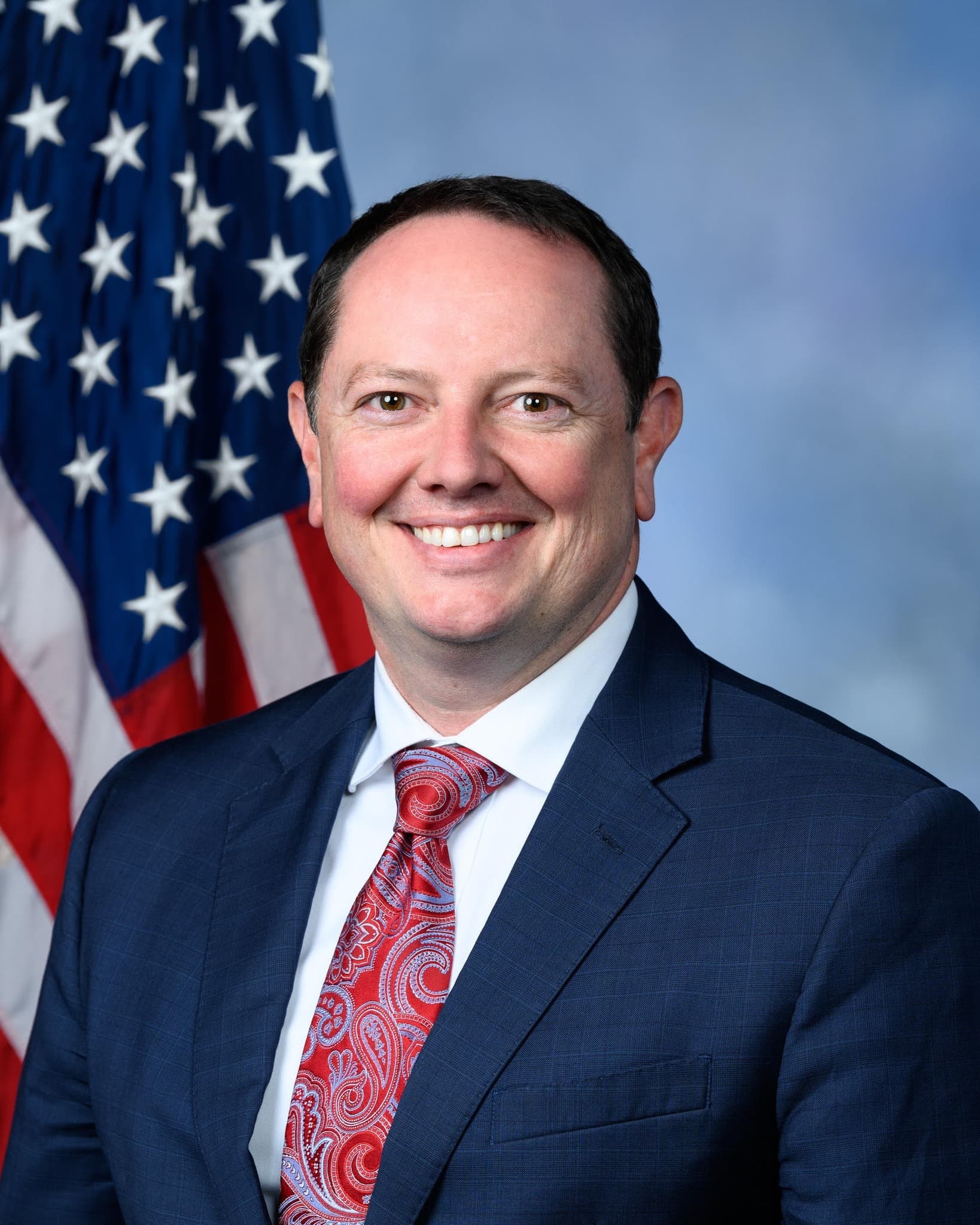

We have already seen what debanking can do; a CBDC would put that power directly in Washington’s hands.
America must never build an economic kill switch.

Rep. Michael Cloud
@RepMichaelCloud
An expiration date is not a ban. It is an on-ramp.
The Permanent CBDC Ban Act is legislation that would permanently prohibit the Federal Reserve from issuing a central bank digital currency.
Press Release  hcloud.house.gov/posts/release-…https://t.co/1l3mJ93Y5y
hcloud.house.gov/posts/release-…https://t.co/1l3mJ93Y5yVery Pro-CryptoAdd commentary on this stance
Commentary on Stance

Representative Eric Burlison recently weighed in on the push to permanently ban Central Bank Digital Currencies in the United States, earning a flawless 100 stance score for his uncompromising defense of financial freedom.
He is voicing strong support for the Permanent CBDC Ban Act, legislation designed to explicitly prohibit the Federal Reserve from ever issuing a digital dollar. To understand why this merits a top score, it is essential to distinguish between organic crypto innovation and state-controlled digital assets.
While decentralized networks like Bitcoin and privately issued, well-regulated stablecoins are massive net positives that empower individuals, a CBDC is the exact opposite. It is a mechanism designed to increase state power, enabling unprecedented surveillance and control over everyday citizens.
Burlison accurately describes a CBDC as an "economic kill switch." By connecting the concept of a CBDC directly to the very real threat of debanking, he highlights how a programmable, government-controlled currency would allow Washington to freeze funds, monitor purchases, or restrict access to the financial system at will. We have already seen the chilling effects of political debanking in traditional finance, and a central bank digital currency would only weaponize that power further.
This position is incredibly consistent with his voting history. Burlison has repeatedly fought against financial surveillance, actively supporting previous efforts like the CBDC Anti-Surveillance State Act. Recognizing that temporary pauses on CBDC research or development are often just stepping stones to eventual implementation, his push for a permanent, statutory prohibition is a crucial victory for anyone who values permissionless, uncensorable money.